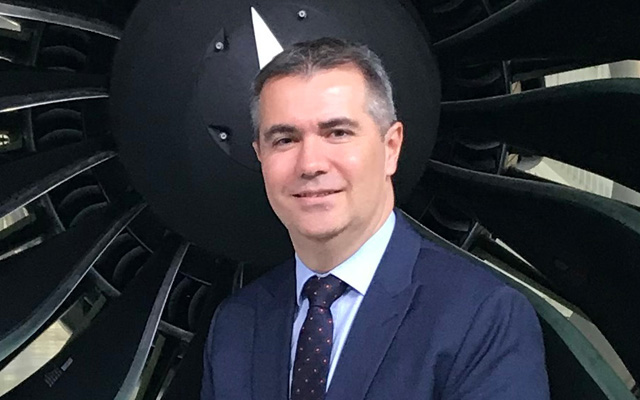
Ibrahim Canliel has taken on the role of CEO at Air Astana Group. He steps up from chief financial officer, a position he has held since 2017.
Canliel has been part of the airline’s leadership team for more than 14 years, supporting its strategic and financial development, including its public listing in 2024.
Dusit International has named Marc Handl managing director of Dusit Thani Bangkok. He will lead the hotel and oversee Dusit Residences and Dusit Parkside at Dusit Central Park.
Handl joins from Abu Dhabi National Hotels, where he was responsible for a portfolio of 15 properties, and brings more than 30 years of experience with brands including Park Hyatt, The Ritz-Carlton, Aman and Rosewood.
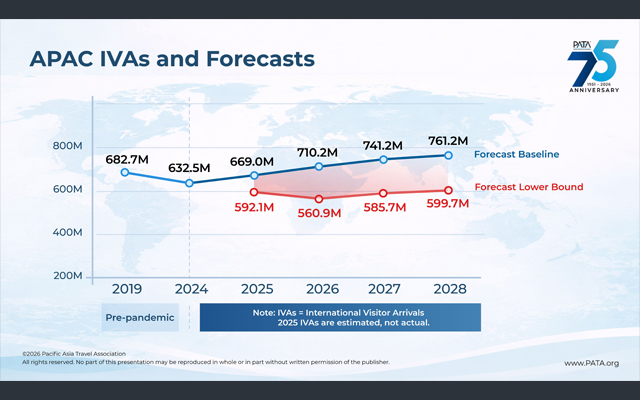
International visitor arrivals to Asia-Pacific are expected to exceed pre-pandemic levels from 2026, according to the PATA Asia Pacific Visitor Forecasts 2026-2028.
The report projects that inbound arrivals could reach 761.2 million by 2028 under a baseline scenario. However, a lower-bound scenario, reflecting geopolitical and economic uncertainty, estimates arrivals could reach 599.7 million, or about 88% of 2019 levels.
International arrivals to Asia-Pacific are projected to reach up to 761.2 million by 2028, with growth shaped by geopolitical and economic uncertainty
The study, developed in partnership with the School of Hotel and Tourism Management at The Hong Kong Polytechnic University, covers 39 destinations across the region and outlines a period of uneven growth influenced by external factors.
These include geopolitical tensions, climate-related disruptions, changes in aviation capacity and visa policies, as well as ongoing digital transformation across the sector.
China, the US and Türkiye are expected to remain the leading destinations through 2028. Key source markets include China, Hong Kong, the US and South Korea.
Several destinations, including Mongolia, Japan, Chile, the Maldives and Sri Lanka, are projected to exceed 150% of their 2019 arrival levels. Overall, 27 of the 39 destinations are expected to surpass pre-pandemic volumes by 2028.
The report also highlights the need for destinations to diversify source markets and strengthen collaboration between public and private sectors to manage risks and support recovery.
“International tourism is entering a more complex phase where growth continues, but under increasing pressure,” said Noor Ahmad Hamid, CEO of PATA. “At PATA, we recognise both sides of the equation – the positive momentum driven by strong regional demand, and the downside risks arising from geopolitical tensions, economic volatility, and climate-related disruptions.
“In this environment, growth is no longer linear or guaranteed. Destinations and organisations must be prepared for multiple scenarios, with the ability to adapt quickly, recalibrate strategies, and respond with agility. Decision-making must be grounded in real-time data and a clear understanding of risk.”
“The results reflect not only the pace of recovery across destinations, but also the deeper structural changes transforming the tourism economy,” added Haiyan Song, School of Hotel and Tourism Management, The Hong Kong Polytechnic University.
“Ultimately, resilience and preparedness will define how well the industry navigates this next phase of uncertainty,” Hamid concluded.
Indian travellers are increasing both travel frequency and spending, reinforcing the country’s position as a key growth market, according to data from Global Hotel Alliance (GHA) and The Leela Palaces, Hotels and Resorts.
Membership in the GHA Discovery loyalty programme in India rose 53 per cent in 2025, surpassing one million members in 2026. Indian members generated US$75 million in global hotel revenue in 2025, an increase of 25 per cent compared with the previous year. International stays accounted for 54 per cent of total member-driven revenue.
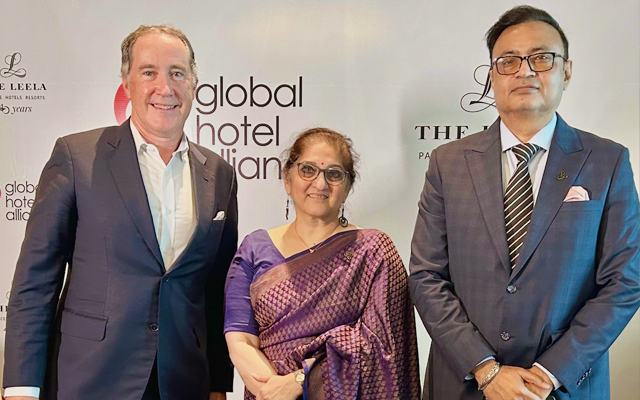
From left: GHA’s Chris Hartley, The Leela’s Anjali Mehra and Anuraag Bhatnagar
The UAE, Thailand and Singapore remained the most popular destinations, with Indian members spending US$43.2 million on international stays compared with US$38.8 million domestically.
Within India, 16 hotels under the GHA Discovery network generated US$82 million in revenue in 2025, up 22 per cent year on year. Growth was supported by domestic demand and international visitors, particularly from the US and the UK.
Outbound travel from India also continued to expand, with 32.7 million international departures recorded in 2025, an increase of 5.9 per cent compared with 2024. Domestic travel has exceeded pre-pandemic levels, while inbound tourism is growing across luxury, cultural and wellness segments.
GHA and The Leela highlighted these trends at the Skift India Intelligence Summit held in New Delhi on March 26, 2026.
Recent research indicates that Indian travellers are placing greater emphasis on privacy, family travel and extended stays. About 49 per cent prioritise travel with family and friends, while 81 per cent of business travellers extend trips for leisure.
The Leela is expanding into destinations including Coorg and Jaisalmer and is developing its private membership club, Arq by The Leela, with planned locations in Delhi, Chennai and Mumbai.
GHA CEO Chris Hartley commented: “India has rapidly become one of the most important and influential travel markets in the world. We are seeing strong growth in membership and spending, alongside a clear shift towards more international travel.”
“As we mark 40 years of The Leela, our journey reflects the evolution of India’s luxury traveller, who is increasingly global in outlook yet deeply drawn to immersive, culturally rooted experiences,” said Anuraag Bhatnagar, CEO of The Leela Palaces, Hotels and Resorts.
“Partnerships such as Global Hotel Alliance play a critical role in connecting us to a global base of high-value travellers, while allowing us to retain the distinct identity of Indian luxury. As we grow, our focus remains on building destination-led experiences that are both globally relevant and deeply rooted in India.”
InterGlobe Aviation (IndiGo) has appointed William Walsh as CEO, subject to regulatory approvals. He is expected to join by August 3, 2026, following the end of his tenure at IATA on July 31, 2026.
Walsh is currently director general of IATA and was previously CEO of British Airways and International Airlines Group, overseeing multiple airline brands.
Hyatt Hotels Corporation has appointed Vikas Chawla as president, India and South-west Asia, effective April 1, 2026.
He brings more than 30 years of experience in food and beverage and consulting. He joins with a background in building and scaling businesses, and will lead Hyatt’s strategy and growth across the region.
Regent Seven Seas Cruises is beckoning explorers with its new 2029 World Cruise, Eras of Exploration, a 150-night voyage departing January 6, 2029 aboard Seven Seas Mariner.
Sailing from Miami to Rome, the itinerary covers more than 37,000 nautical miles, visiting 70 ports across seven continents. The journey includes destinations in South America, Antarctica, Polynesia, Australia, South-east Asia, the Indian Ocean and the Mediterranean.
Seven Seas Mariner will sail a 150-night world cruise in 2029, visiting 70 ports across seven continents; photo by Regent Seven Seas Cruises
The cruise includes 326 shore excursions and 13 overnight stays in destinations such as Lima, Sydney and Singapore. Guests will also visit 57 UNESCO World Heritage Sites.
Seven Seas Mariner, which accommodates up to 700 guests, has undergone refurbishment with updated suites, redesigned bathrooms in selected categories and enhanced dining facilities, including a new culinary studio.
Fares start from US$99,999 per person for a Deluxe Veranda Suite and reach US$344,999 for a 186m² Signature Suite. Reservations open April 1, 2026.
Guests will begin the journey with a one-night hotel stay in Miami and a pre-cruise event. The cruise also includes services such as shore excursions, laundry and luggage handling.
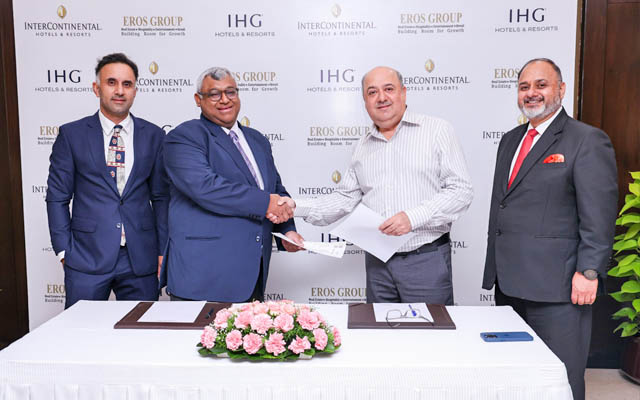
IHG Hotels & Resorts has signed a management agreement with Eros Group to bring the InterContinental brand to a hotel in New Delhi, with reopening planned for 2029 following renovation.
The property, InterContinental Eros New Delhi Nehru Place, will be located in South Delhi’s commercial district and is intended to serve both business and leisure demand. The agreement forms part of IHG’s strategy to expand its luxury and lifestyle portfolio in India.
InterContinental Eros New Delhi Nehru Place will reopen under IHG management following renovation, adding 216 rooms to the group’s portfolio
The hotel was originally launched in 1996 and previously operated under the InterContinental brand before becoming an independent property. It will return to the IHG system under this latest agreement.
Once redeveloped, the hotel will offer 216 rooms and suites, along with dining venues including restaurants, a bar and a lobby lounge. Facilities will include meeting and event spaces, a ballroom, outdoor lawn areas, a spa, fitness facilities and a swimming pool.
The property is located near Nehru Place Metro Station and within 30 to 35 minutes of Indira Gandhi International Airport. It is also close to landmarks such as the Lotus Temple and Kalkaji Mandir.
“Further strengthening our existing association with Eros Group, we look forward to creating a destination that supports both business and leisure demand while offering a luxury hospitality experience to our discerning guests,” said Sudeep Jain, managing director, South West Asia, IHG Hotels & Resorts.
“This partnership aligns with our long-term vision of developing landmark hospitality assets in India’s most dynamic cities, and we look forward to welcoming our guests as we open doors as ‘InterContinental Eros’ hotel,” added Satish Sood, managing director, Eros Group.
Millennium Hotels and Resorts has named Cinn Tan as chief commercial officer.
She brings more than 30 years of experience across Asia-Pacific, China, Europe and the US.
She joins from Pan Pacific Hotels Group, where she was chief commercial and marketing officer, and has previously held senior roles at Jin Jiang International and Ascott .
Fuel price surge and conflict are hitting airlines and Middle East tourism, with arrivals forecast to fall by up to 27 per cent
Passenger confidence in Gulf carriers remains strong, with most willing to return within three to six months after the conflict
Higher airfares are shifting behaviour, with leisure travellers adjusting plans while business travel holds steady
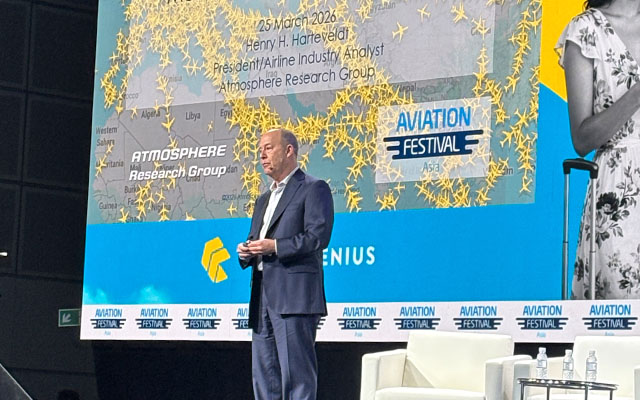
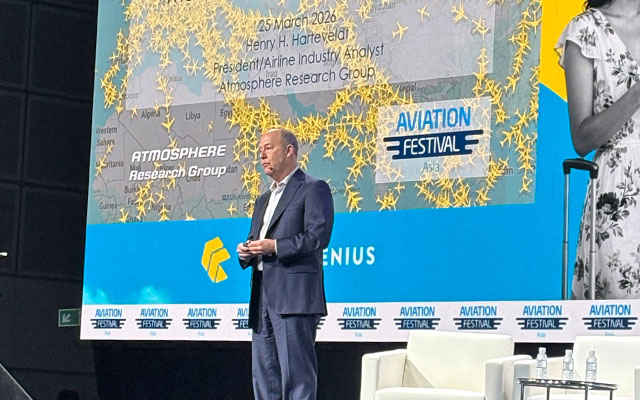
Harteveldt remarked that the Middle East aviation outlook may be messed up, but there is hope; photo by Caroline Boey
The Middle East aviation outlook following the war on Iran may be “messed up, but there is hope”, according to US-based Atmosphere Research Group, which conducted a survey across five key markets – Australia, Hong Kong, India, the UK and the US – shortly before last week’s Aviation Festival Asia in Singapore.
President and airline industry analyst Henry H Harteveldt, in his keynote address on March 25, described the 77.7 per cent jump in the US Spot Jet Fuel Index – from US$2.42 per gallon on February 27 before the war to US$4.30 per gallon on March 24 – as “unbelievable, unsustainable, unaffordable”.
Harteveldt highlighted Saudi Arabia’s warning that oil prices could exceed US$180 a barrel if the conflict continues, adding that attacks on energy infrastructure could cause long-term damage and that future price levels remain uncertain.
“Oil and jet fuel disruptions are impacting countries across the Indo-Pacific region,” he commented.
With Gulf tourism severely impacted and the WTTC estimating losses of US$600 million a day in visitor spending, arrivals in the Middle East could fall by 11 to 27 per cent compared to December 2025, translating to losses of US$348 million to US$568 million.
Emirates, Etihad Airways and Qatar Airways carry a significant share of Asia-Pacific traffic, particularly on Europe-Asia and Europe-Australasia routes.
Non-Gulf carrier capacity to the Middle East is mixed, with SAS, Air New Zealand, Cebu Pacific, United Airlines and China Southern cutting flights, while Norwegian, Air France-KLM, Lufthansa and Frontier Airlines have added capacity.
Atmosphere’s online consumer survey – with 1,000 respondents in Australia, 500 in Hong Kong, 1,500 in India, 1,250 in the UK and 1,500 in the US – shows Gulf carriers have maintained passenger confidence.
He said: “Despite the attack on Gulf airports, nearly nine in 10 passengers view Gulf region airlines as safe.
“Once fighting has stopped and the region is believed to be stable, five per cent of passengers would fly a Gulf carrier ‘immediately’, 51 per cent would consider flying a Gulf carrier within three months after the war ends, and 29 per cent would fly within three to six months after fighting ends.”
As for the ability to fund future travel, the survey shows that “passengers were struggling to save enough to travel even before the war on Iran began”.
In Australia, 33 per cent said it was more difficult, compared to 22 per cent who said it was easier; 27 per cent versus 25 per cent in Hong Kong, 42 per cent versus 29 per cent in India, 35 per cent versus 26 per cent in the UK, and 39 per cent versus 41 per cent in the US, bucking the trend marginally.
However, Harteveldt offered some optimism. “Of the few passengers with March/April travel plans affected by the war, most plan to travel.”
The survey showed four per cent of leisure passengers and seven per cent of business travellers had March/April trips affected by the war. Business travellers “show enormous conviction”, being 3.6 times more likely to change airlines than cancel, with 69 per cent proceeding as planned and 15 per cent cancelling.
Rising airfares are also influencing leisure travel decisions as passengers look to save money.
Harteveldt said 25 to 34 per cent will change travel dates, 19 to 28 per cent will cancel, 21 to 26 per cent will switch airlines, and 11 to 16 per cent will change destinations but keep their preferred airline.
“The risk of higher fares has prompted some leisure passengers to book flights earlier,” he added, as “passengers fear if inflation accelerates, they may not be able to take a summer holiday or vacation trips”.
Speaking at a panel discussion following the keynote, Richard Nuttall, president of Philippine Airlines (PAL), sees a window of opportunity, though it may narrow once Gulf carriers “gradually work their way back, buy back market share”, and return to normal within 12 months.
“The reality is we don’t know (when the region and airlines will rebound), but we need to take advantage when we can,” he commented.
Azim Barodawala, CEO of Volantia, a re-commerce platform that helps airlines drive new, measurable revenue on peak flights, called for “passenger flexibility”.
He noted that PAL and Saudia Airlines are still able to move passengers and are not overbooked.

 Canliel has been part of the airline’s leadership team for more than 14 years, supporting its strategic and financial development, including its public listing in 2024.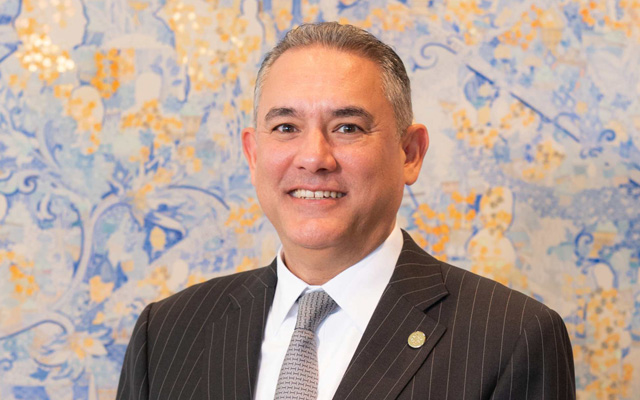
 Handl joins from Abu Dhabi National Hotels, where he was responsible for a portfolio of 15 properties, and brings more than 30 years of experience with brands including Park Hyatt, The Ritz-Carlton, Aman and Rosewood.


 Walsh is currently director general of IATA and was previously CEO of British Airways and International Airlines Group, overseeing multiple airline brands.
 He brings more than 30 years of experience in food and beverage and consulting. He joins with a background in building and scaling businesses, and will lead Hyatt’s strategy and growth across the region.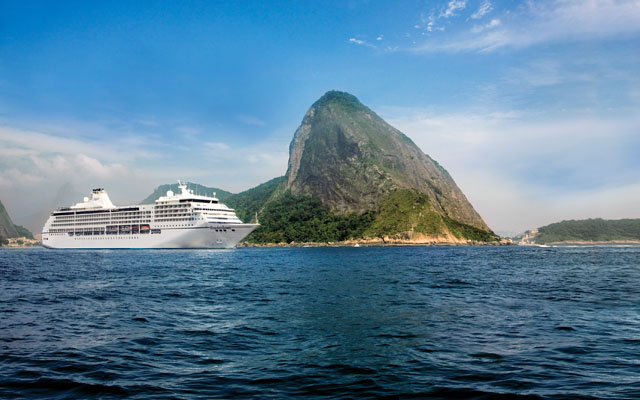

 She joins from Pan Pacific Hotels Group, where she was chief commercial and marketing officer, and has previously held senior roles at Jin Jiang International and Ascott .